
Moving home can feel unsettling at any age. When dementia affects memory, familiar rooms, objects and routines may also help someone feel safe, so a change of address can carry a particular emotional weight for the person moving and the people who love them.
A new layout may be difficult to recognise or navigate. Even a carefully planned move can bring distress or a noticeable change in confusion. That does not mean a move cannot go well; it means the planning needs to begin with the person, not simply the property.
At The Senior Move Partnership, we provide move management and relocation support. We act as the logistics bridge between the current home, the removal team and the new home’s care or retirement team, helping the transition feel as familiar and considered as possible.
Why familiarity matters
A favourite chair by the window, the route to the bathroom, the sound of a familiar radio programme: these everyday details can be meaningful anchors. In an unfamiliar space, it may take time to understand where things are and what is expected.
The move itself can also bring changes in routine, surroundings and the number of people involved. For someone living with dementia, all of this may feel disorientating. The Alzheimer’s Society’s guidance on moving after a dementia diagnosis recognises that timing and individual circumstances matter; there is no single right answer for every family.
It can help to think less about making everything new and more about carrying forward the parts of daily life that already feel reassuring.
Plan around the person, not the property
A floorplan helps decide what will fit. But when dementia is part of the picture, a good move plan also considers how the person experiences their day: what they recognise, when they feel most settled, and which changes may be hardest.
A few practical suggestions can help create continuity:
Keep familiar routines wherever possible. Aim to preserve usual waking, mealtimes, rest and bedtime patterns on moving day. Ask the care team which routines they can maintain after arrival.
Prepare one room first. Before the person arrives, arrange a familiar room, often the bedroom or sitting area, with recognisable furniture, bedding and personal belongings.
Keep furniture in familiar relative positions. If possible, place the bed, chair and bedside table in a similar arrangement to the old home. A new room will still be different, but familiar relationships between objects can make it easier to recognise.
Use clear visual cues. With the new team’s agreement, add photographs or simple labels to doors and cupboards. A familiar picture on a bedroom door or a clear label on a drawer can offer a gentle prompt.
Reduce unnecessary activity. Keep the space as calm and uncluttered as practical, with only a few people present at once.
If an established routine cannot be kept exactly, try to preserve its reassuring parts. The familiar cup of tea, favourite radio station or usual lunch may be a small but valuable point of continuity.
Make a memory box part of the journey
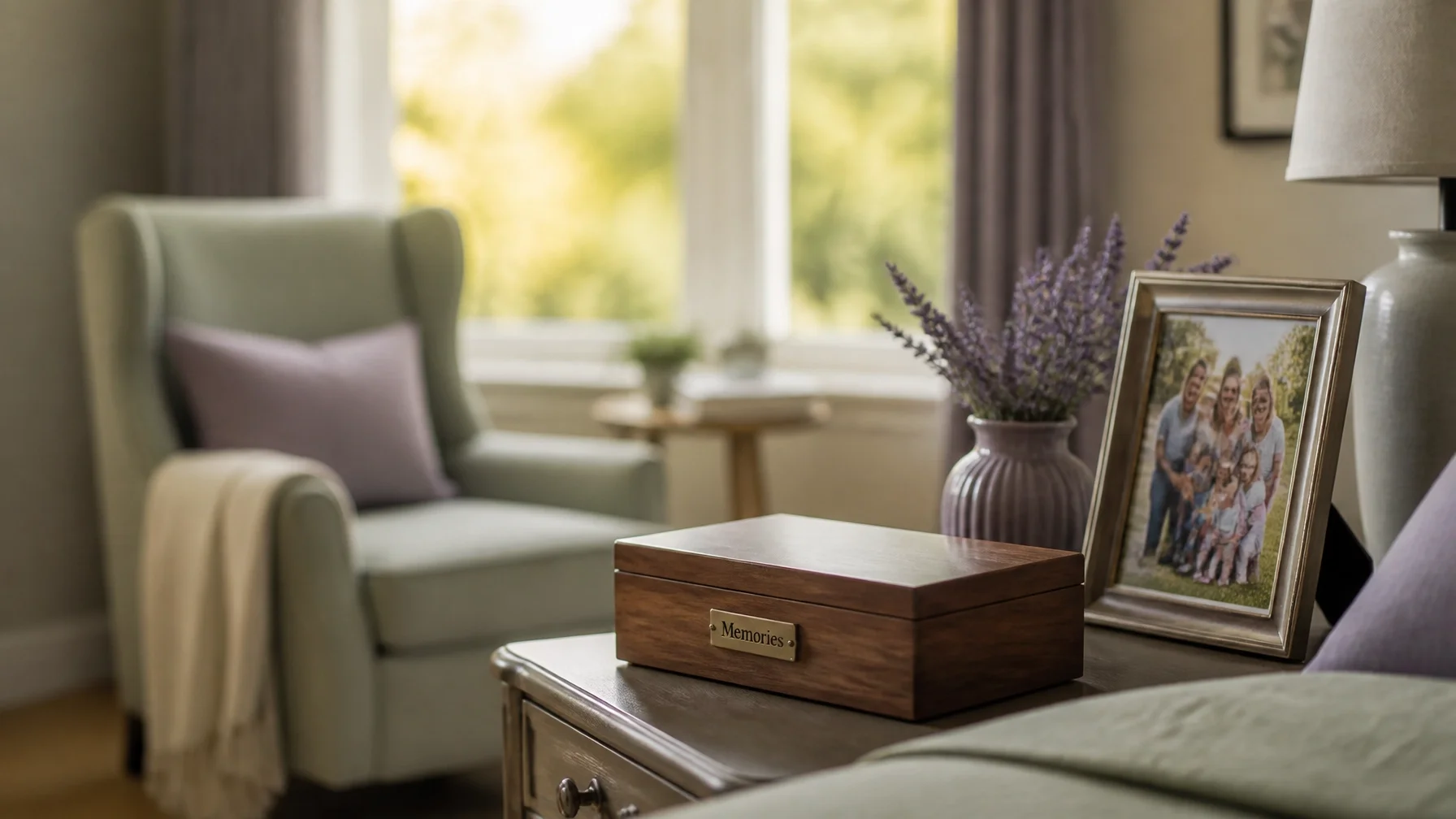
A memory box is a small, thoughtfully chosen collection of familiar things. It might include a family photograph, a soft blanket, a favourite mug, a much-loved piece of music or a letter that holds special meaning.
The important detail is how it travels: keep the box with the person in the car, rather than sending it in the removals van. When you arrive, unpack it with them before attending to other belongings. These objects can offer a familiar focus while the new room is being introduced.
Choose items the person responds to positively, and keep the box manageable. There is no need to fill it; a few meaningful things are often enough. We can support families to plan and prepare a memory box as part of our specialist relocation support.
Share the person’s story with the new team
Family members often hold important knowledge that may not be obvious on a care plan: the name the person prefers, a familiar greeting, a food they dislike, or a time of day when they are more likely to feel tired.
A simple, one-page “This is me” summary can help the new care home or retirement community team get to know the person beyond the move. You might include:
Preferred name and names of close family or friends
Usual daily routines, including meals and rest
Interests, favourite music, familiar objects and conversation topics
Dislikes, known triggers and what tends to soothe or reassure
How the person communicates discomfort or needs
Any practical information the care team asks you to share
Keep the information clear and useful, and agree with the team how best to share it. This is not a substitute for clinical or care records; it is a personal introduction that can help staff offer more individual, respectful support.
Involve the person gently
It can be hard to judge how much of the planning to involve someone in. Being included can support dignity and choice, but too many decisions or repeated explanations may feel overwhelming. Let their responses guide you, and break choices into small, familiar steps.
Instead of: “We have to sort everything in the house today. What do you want to get rid of?”
Try: “Would you like to choose which photographs come with you?”
Instead of: “Your room is completely different now, but you’ll get used to it.”
Try: “Here’s your chair by the window, just as you like it. Would you like to sit here for a little while?”
Instead of: “You need to decide what happens to all of this.”
Try: “Shall we look at these two things together and choose which one you’d like to keep nearby?”
Sometimes family members may need to carry more of the practical decisions, particularly when a discussion is causing distress. That can be done with patience and respect: preserve the person’s preferences wherever you know them, and avoid treating their belongings or feelings as obstacles to the schedule.
Keep moving day calm and as short as possible
A long, busy day with unfamiliar people coming and going can be tiring. Where the schedule allows, avoid the final move taking place late in the afternoon or evening, when the person may already be tired. Keep the day as short and predictable as possible, and limit the number of new faces around them.
A simple sequence can help:
Agree the plan with family and the care team in advance. Decide who will stay with the person and who will liaise with the removal team.
Keep familiar routines in place. Plan around usual meals, medication arrangements and rest, coordinating any care-related details with the appropriate team.
Prepare the first room before arrival. Set up the familiar furniture and essentials, then bring in the memory box with the person.
Allow time to pause. A quiet moment, a drink or a familiar activity can be more helpful than trying to unpack everything immediately.
If distress or confusion increases, respond gently and reduce stimulation where you can. A move may contribute to unsettled behaviour, but sudden or marked changes can have other causes too. If you are concerned, speak with the person’s care team or an appropriate health professional rather than assuming the move is the only explanation.
The practical work we can take off your hands
The emotional side of a move deserves space. So does the detailed coordination that helps the day run smoothly. Our Senior Move Managers can support with:
Decluttering and rightsizing belongings with dignity
Liaising with estate agents
Sourcing and coordinating removal quotes
Coordinating packing and unpacking
Disposing of or dispersing items to family, charities or auction
Professional auction assistance for suitable items
Coordinating storage
Planning floor layouts and familiar furniture placement
Memory-box support for clients living with dementia
We are not a removals company and do not carry furniture ourselves. We coordinate removal quotes and work with removal partners for the physical move. We also do not provide clinical or dementia nursing care; we work alongside the person’s family and care team, who remain responsible for their care and clinical needs.
We work with families and retirement and care providers, including settings associated with Riverstone London, Audley Villages and McCarthy Stone. Our role is to manage the relocation details so the person and those supporting them can focus on wellbeing, familiarity and a considered welcome.
A new address, with familiar points of comfort
Settling in may take patience. A room does not need to feel like home all at once. Familiar possessions, recognisable routines and a thoughtful introduction from the care team can help create a gentler start.
For more practical guidance, you may find our guides to decluttering with dignity, moving into a care home and settling into a retirement or care home helpful.
If you are planning a move for someone living with dementia, we can help you shape a practical plan around their routines, belongings and support network. A calm, well-coordinated transition cannot remove every uncertainty, but it can make room for what matters most: the person feeling recognised, respected and supported in their new home.